

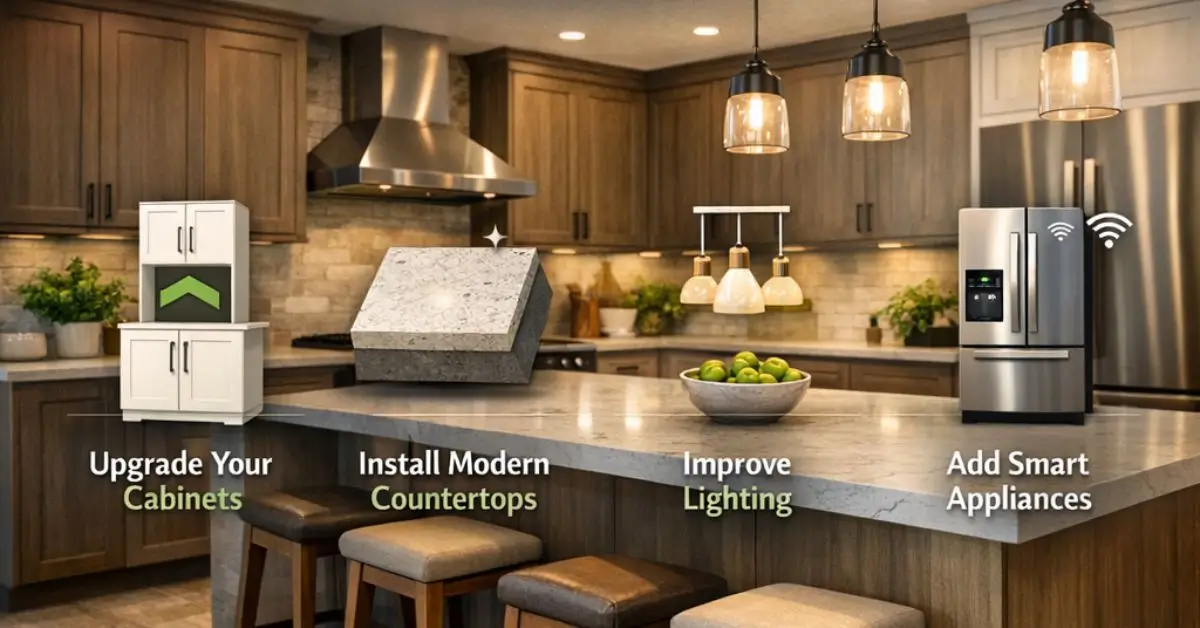
Kitchen Upgrading Tips
The kitchen is the room most homeowners want to improve and most homeowners feel most uncertain about upgrading. It is the most expensive room in the house to renovate, the one most likely to affect resale value significantly, and the one where poor decisions are hardest and most expensive to undo.
The result is that many kitchens stay in a dated or underperforming state not because homeowners lack interest in improving them but because the complexity of the decisions involved creates genuine uncertainty about where to start.
This guide covers kitchen upgrading tips that work at every budget level. What to prioritize first, which changes deliver the strongest return, what the realistic costs look like for US homeowners, and what to avoid spending money on when the budget is limited.
What Are Kitchen Upgrading Tips?
Kitchen upgrading tips mintpalment principles refer to practical guidance on improving a kitchen’s appearance, functionality, and value through strategic upgrades rather than full renovation. These tips cover everything from low-cost cosmetic changes that produce significant visual improvement to mid-range investments in countertops, hardware, and lighting that transform how a kitchen looks and works daily. The goal is helping homeowners make informed, prioritized decisions about where kitchen improvement spending delivers the most reliable and lasting value.
Quick Summary
Smart kitchen upgrading starts with the highest-impact, lowest-cost changes first, then moves to mid-range investments. Cabinet hardware, lighting, countertops, and paint are the upgrades that consistently deliver the strongest visual return. Full cabinet replacement is only justified when cabinets are structurally damaged. This guide covers the full priority sequence with realistic US cost context.
Why Kitchen Upgrades Require a Clear Strategy
The kitchen improvement industry generates enormous content output, most of which focuses on the most dramatic and expensive transformations. Full gut renovations with custom cabinetry, high-end appliances, and structural layout changes make for compelling before-and-after content. They are also out of reach for most homeowners most of the time.
What this content focus creates is a distorted picture of what kitchen upgrading actually looks like for the majority of homeowners. The reality is that most of the visual improvement in a kitchen can be achieved through strategic, targeted changes that cost a fraction of a full renovation and deliver most of the result.
Kitchen upgrading tips mintpalment guidance focuses on this practical middle ground. Changes that are genuinely achievable, genuinely impactful, and genuinely worth the investment based on what they deliver rather than what they cost.
Priority 1: High-Impact, Low-Cost Changes
These are the upgrades to complete first regardless of budget because they deliver the most visual improvement per dollar spent.
Cabinet Hardware Replacement
This is the single highest return kitchen upgrade available. Replacing dated cabinet and drawer hardware with current finishes, whether matte black, brushed nickel, satin brass, or brushed gold, changes the entire feel of a kitchen without touching the cabinets themselves.
A standard kitchen has between 20 and 40 hardware pieces. At $3 to $8 per piece for quality hardware, the total investment is typically $60 to $320 for the materials. Professional installation is straightforward enough that most homeowners can complete it in an afternoon. The visual difference is immediate and significant.
The choice of finish should coordinate with other metal elements in the kitchen. Faucet, light fixtures, and appliance handles should all move in the same finish direction for the kitchen to feel cohesive.
Paint
Fresh paint applied correctly is the second most impactful low-cost kitchen upgrade. In kitchens, paint typically covers walls above the backsplash and any visible ceiling area.
The color choice matters significantly. Warm whites, soft greige tones, and light sage greens are the current choices that age well and work with a wide range of cabinet and countertop combinations. Bold or trendy colors date quickly and limit future flexibility.
A kitchen paint job costs $40 to $60 in materials and $200 to $500 professionally. DIY execution is practical for most homeowners and reduces the cost to materials alone.
Lighting Updates
Kitchen lighting is systematically underinvested in most US homes. A single overhead fluorescent or basic flush mount fixture makes even a well-designed kitchen feel institutional and flat.
Three lighting types belong in a well-lit kitchen. Overhead ambient lighting controlled by a dimmer switch. Task lighting under cabinets that illuminates countertop work surfaces. And a statement pendant or two over an island or peninsula if the layout allows.
Under-cabinet LED tape or puck lights are inexpensive to purchase and relatively simple to install. They transform how a kitchen feels in the evening and make food preparation significantly easier. This is one of the most overlooked kitchen upgrading tips that consistently produces high satisfaction relative to cost.
Priority 2: Mid-Range Upgrades With Strong Returns
Once the low-cost, high-impact changes are in place, these mid-range upgrades deliver the next tier of visual and functional improvement.
Countertop Replacement
Countertops are one of the most visible elements in any kitchen and one of the most significant contributors to how current or dated a kitchen feels. Replacing outdated laminate or tile countertops with quartz is the upgrade that most consistently produces high satisfaction in kitchen improvement projects.
Quartz countertops are durable, non-porous, low-maintenance, and available in finishes that range from pure white to realistic stone looks. They do not require sealing, resist staining better than natural stone, and are available at price points ranging from modest to premium.
A standard kitchen countertop replacement with mid-range quartz typically costs $2,000 to $4,500 installed, depending on square footage and edge profile selection. This is a significant investment that is worth making after the high-impact low-cost changes have already been completed.
Cabinet Painting or Refacing
If existing kitchen cabinets are structurally sound but visually dated, painting them is significantly more cost-effective than replacing them. Professionally painted kitchen cabinets cost $1,500 to $4,000 depending on kitchen size and the level of preparation involved. This compares to $8,000 to $25,000 or more for full cabinet replacement.
The result, when done properly, is indistinguishable from new cabinets in terms of visual impact. The key qualifier is “done properly.” Cabinet painting is a labor-intensive process that requires thorough cleaning, sanding, priming, and multiple finish coats to produce a durable result. Shortcuts in preparation create a finish that chips, yellows, and peels within a year or two.
Cabinet refacing, where new door and drawer fronts are applied to existing cabinet boxes, is an intermediate option that costs more than painting but less than full replacement. It is worth considering when the cabinet box structure is sound but the door and drawer fronts are beyond what paint can address.
Backsplash Installation
A new backsplash changes the visual character of a kitchen meaningfully while covering a relatively small area. Subway tile, zellige, handmade ceramic, and large-format porcelain are all options that work well in the current market.
Kitchen backsplash installation costs range from $500 to $2,500 depending on tile selection and kitchen size. It is one of the more accessible mid-range upgrades in terms of DIY execution for homeowners comfortable with basic tile work.
Priority 3: Appliance and Fixture Updates
Appliances and plumbing fixtures are the third tier of kitchen upgrading priorities because they cost more than cosmetic changes and have different functional and financial justifications.
Faucet Replacement
A new kitchen faucet in a current finish coordinates with updated hardware and changes the focal point of the sink area significantly. A quality kitchen faucet costs $150 to $500 and installation adds $100 to $200 in most markets. This is an accessible upgrade that produces a visible result quickly.
Appliance Updates
Appliances represent the most expensive component of most kitchen upgrading budgets. The most impactful appliance upgrade is typically the refrigerator, which is the most visible appliance from the main kitchen sightline. Matching appliance finishes, whether stainless steel, black stainless, or panel-front, across the major units creates visual cohesion.
Replacing all appliances at once is rarely necessary. Prioritizing the most visible unit first and replacing others as they age or fail is a more financially practical approach for most homeowners.
Kitchen Upgrading Budget Overview
| Upgrade Type | Low End | Mid Range | High End |
|---|---|---|---|
| Cabinet hardware | $60 | $200 | $400 |
| Paint | $40 | $250 | $600 |
| Under-cabinet lighting | $100 | $300 | $600 |
| Pendant lighting | $150 | $400 | $1,000 |
| Countertops (quartz) | $2,000 | $3,500 | $6,000+ |
| Cabinet painting | $1,500 | $2,500 | $4,000 |
| Backsplash | $500 | $1,200 | $2,500 |
| Kitchen faucet | $200 | $400 | $700 |
These ranges reflect typical US market costs and vary by region and contractor rates.
What Not to Spend Money On
Part of practical kitchen upgrading tips is knowing what to avoid.
Do not replace structurally sound cabinets. If cabinet boxes are solid and properly installed, painting or refacing them saves $6,000 to $20,000 compared to full replacement with results that are visually equivalent.
Do not install trendy finishes that date quickly. Rose gold hardware, highly specific accent colors, and statement tiles that are very specific to a particular moment in design history can make a kitchen look dated within five years. Classic finishes in current but not trend-dependent choices age significantly better.
Do not invest heavily in a kitchen that exceeds the neighborhood value ceiling. A $60,000 kitchen renovation in a home worth $350,000 in a neighborhood where comparable homes sell for $400,000 will not recover its cost. Kitchen upgrades should be proportional to the home’s overall value and the local market ceiling.
Conclusion
Kitchen upgrading does not require a full renovation to produce meaningful results. The most impactful changes are often the least expensive, and the most expensive changes are only justified when the foundational cosmetic upgrades have already been completed.
Kitchen upgrading tips mintpalment principles consistently point to the same practical conclusion. Start with hardware, paint, and lighting. Assess whether countertops need replacement. Consider cabinet painting before ever considering cabinet replacement. Add appliances when budget allows and existing ones are failing rather than simply aging.
That sequence maximizes the visual impact of every dollar spent and produces a kitchen that looks genuinely improved rather than just differently decorated.
Frequently Asked Questions
What kitchen upgrades add the most value?
Countertop replacement, cabinet painting or refacing, updated hardware, improved lighting, and coordinated appliances add the most value. Minor kitchen remodels consistently rank among the highest return home improvement investments in the US market.
What is the cheapest way to upgrade a kitchen?
Replace hardware, repaint in a warm neutral, and improve lighting. These three changes cost under $800 combined and produce dramatic visual improvement without touching cabinets, countertops, or appliances.
Should I paint or replace my kitchen cabinets?
Paint them if they are structurally sound. Professional cabinet painting costs $1,500 to $4,000. Full replacement costs $8,000 to $25,000 or more. Replacement is only justified when cabinet boxes are damaged or beyond repair.
How much does a kitchen upgrade cost?
Cosmetic upgrades cost $500 to $1,500. A mid-range refresh with countertops and cabinet painting runs $4,000 to $8,000. A full renovation costs $20,000 to $60,000 or more. Most homeowners achieve strong results at the mid-range level.
What kitchen upgrades are worth it before selling?
Fresh paint, new hardware, updated lighting, and clean countertops support stronger sale prices without large investment. Avoid major renovations before selling unless specific deficiencies are actively reducing buyer offers.
What is the best countertop material for a kitchen upgrade?
Quartz is the most practical choice. It requires no sealing, resists stains, and is available at multiple price points. Granite suits homeowners who prefer natural stone and are comfortable with annual sealing maintenance.